Orders that are delayed between desks, budgets that are not spent optimally, and purchases that are made without coordination and without sufficient information from the supplier can quickly disrupt an organization's processes. Didgah's purchasing and procurement software manages the entire path of purchasing goods and services from request registration to delivery and settlement, in an integrated and transparent digital platform; so that each request at every stage has a clear and trackable status. With this software, every request can be transparently tracked from the moment of registration to delivery, processes are executed without stopping and regularly, and decisions will be fast, accurate, and documented.

All stages of purchasing goods and services, from registering a request to making a purchase and settling, can be viewed and tracked centrally.
Compliance with Regulations
The processes are designed so that all stages of purchasing are in line with the organization's regulations and legal requirements.
Integrated Management of Purchasing Goods and Services
Registration, tracking and management of purchasing goods and services are carried out in a single system.
Integration with Organizational Systems
This software is integrated with warehouse, budget, credit, and contract systems and prevents information inconsistencies.
Reduce Time and Cost of Shopping
By eliminating manual activities and preventing repetitive purchases, the purchasing cycle time and the organization's costs are reduced.
Documentation and Response
All records, documentation, and actions taken in the purchasing process are recorded and maintained, allowing for accurate accountability.
Management Decision Support
Various reports and dashboards provide managers with the necessary information for performance monitoring and cost analysis.
کاربری آسان و ساختارمند
طراحی ساده و ساختارمند سامانه، استفاده از نرمافزار را برای کاربران با نقشهای مختلف ساده و آسان میکند.
Procurement Management Features
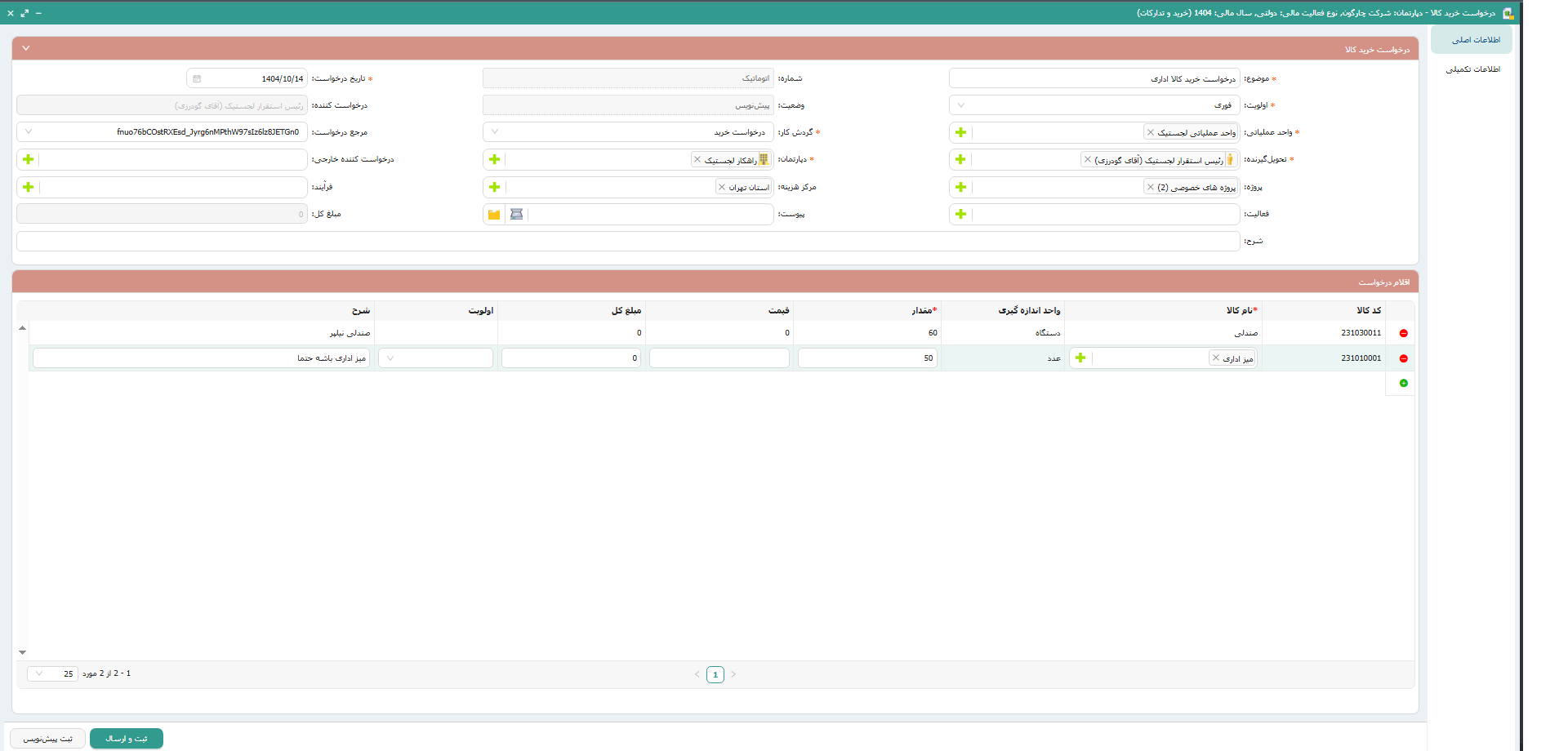
Registering requests and approvals
Registering requests for the purchase of goods and services with complete details and sending them to approvers. The approval process is designed according to the organization's internal workflow and allows you to set priorities, required dates, and attach documents so that requests are recorded clearly and without errors.
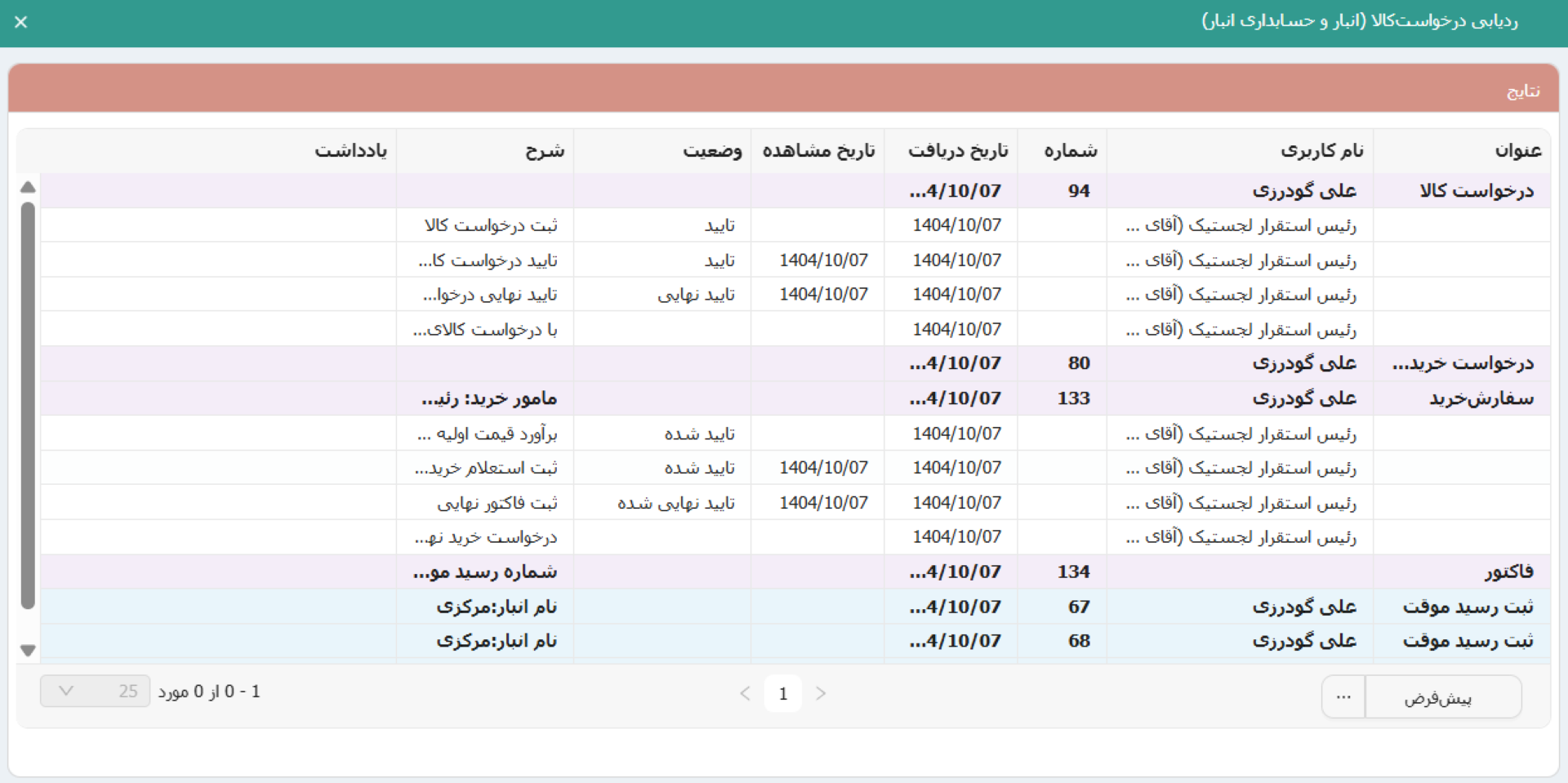
Tracking Status and Approvals
The status of each request and approval steps are transparently visible to the requester and the authorities. Alerts and notifications simplify the tracking of steps and reduce the time to complete the processes.
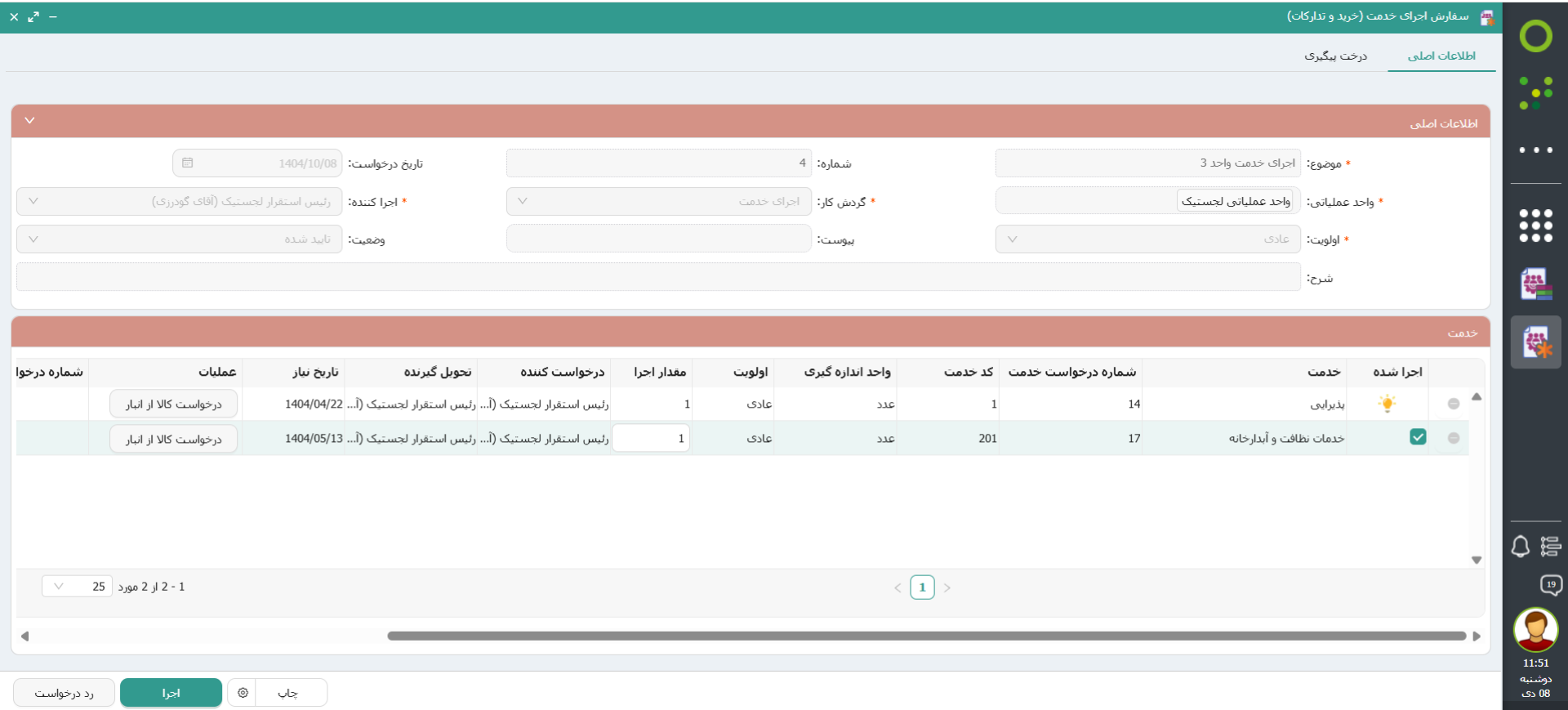
Tracking and Implementing Internal Services
After approval, service requests are transferred to the service implementation stage. Services provided by the organization's internal forces, such as IT services, catering, facilities and transportation, are also managed by the system and assigned to the relevant executive or person in charge. All actions taken are recorded and the progress of each service can be viewed in stages.
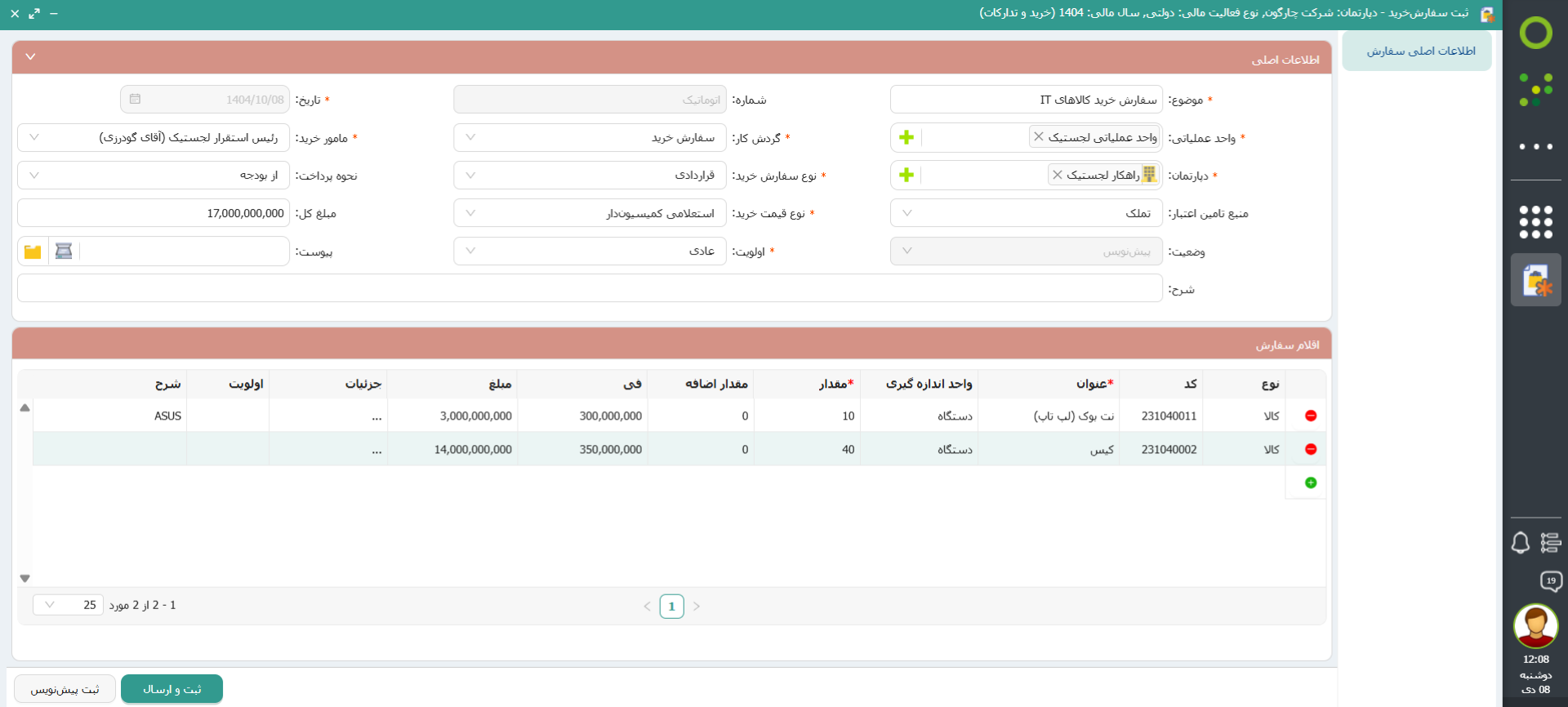
Order Management
Requests for the purchase of goods and services are assigned to the relevant purchasing officer after final approval. Each officer only sees orders related to him/her, and responsibilities are separated so that follow-ups are simple and transparent. All purchases are controlled in accordance with internal circulations and the organization's regulations, and it is possible to create a consolidated shopping cart for goods and services so that the purchasing process is coordinated and optimized.
Inquiry and Commission Meetings
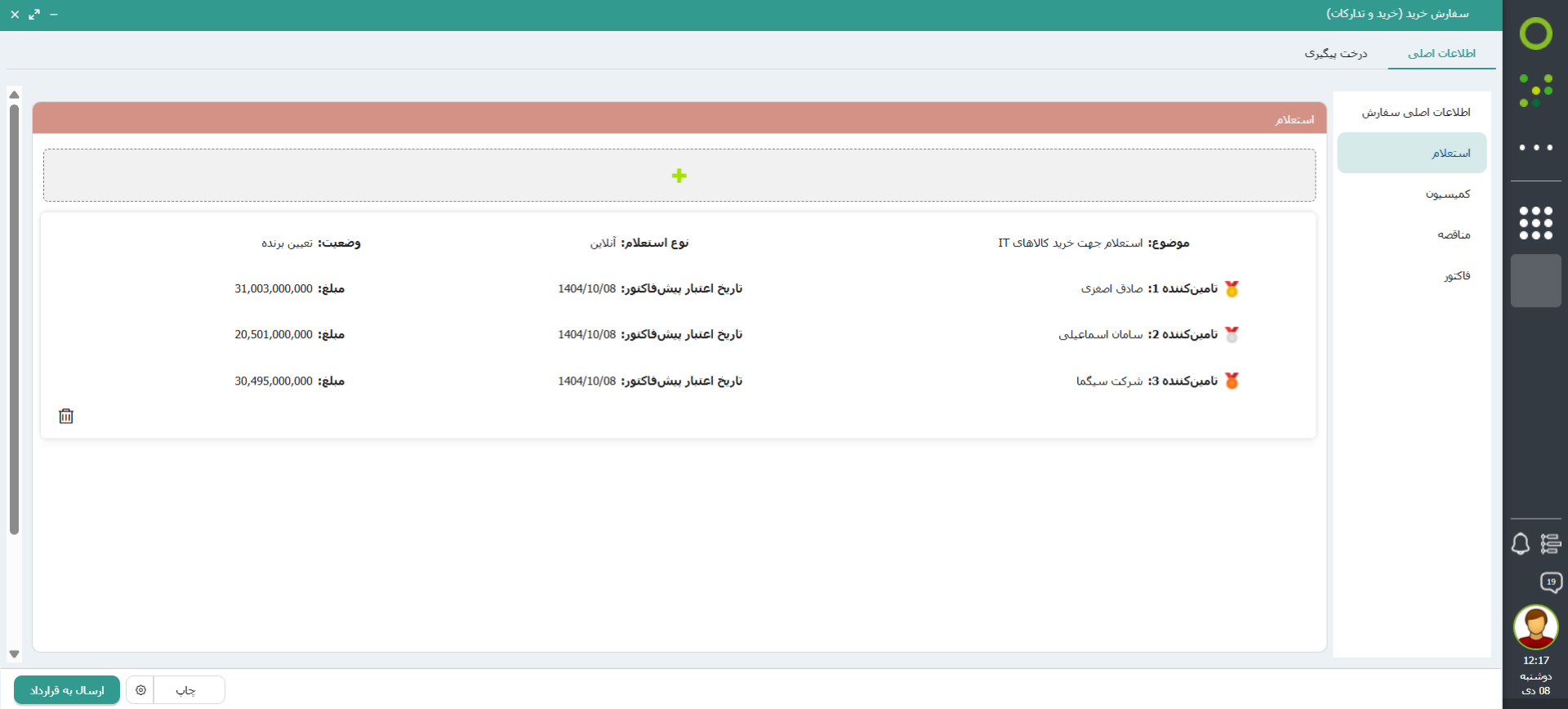
Purchase inquiries are made by collecting prices and supplier specifications. Commission meetings are held before the purchase to determine the purchase method and during the process to select the winner of the inquiry with the registration of the reason for approval or rejection so that decision-making is transparent, documented and in accordance with the organization's regulations.
Tender and evaluation of bidders
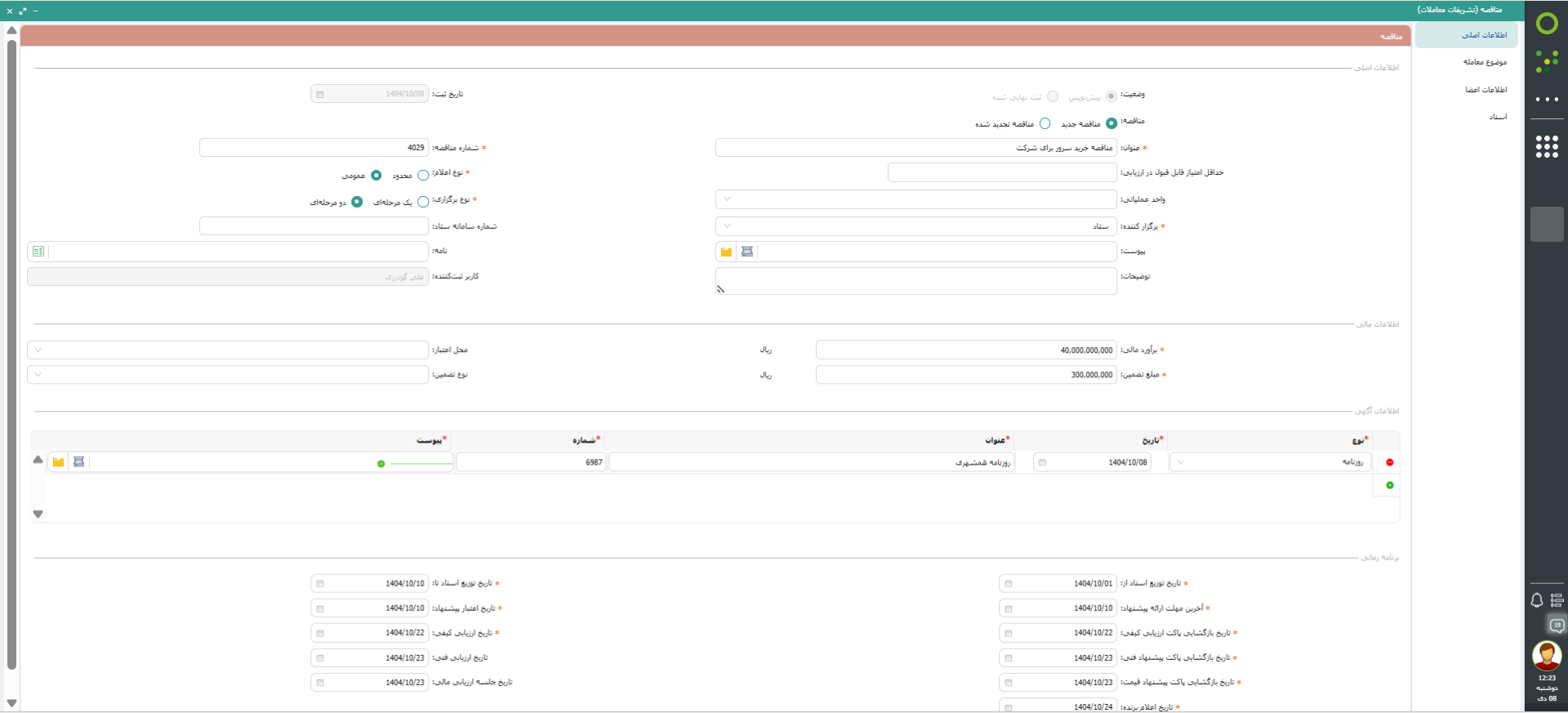
The bidding process is carried out in a structured manner, offers are registered and bidders are evaluated based on performance and legal indicators. It is also possible to view the history and records of bids.
Supplier Management and Data Integration
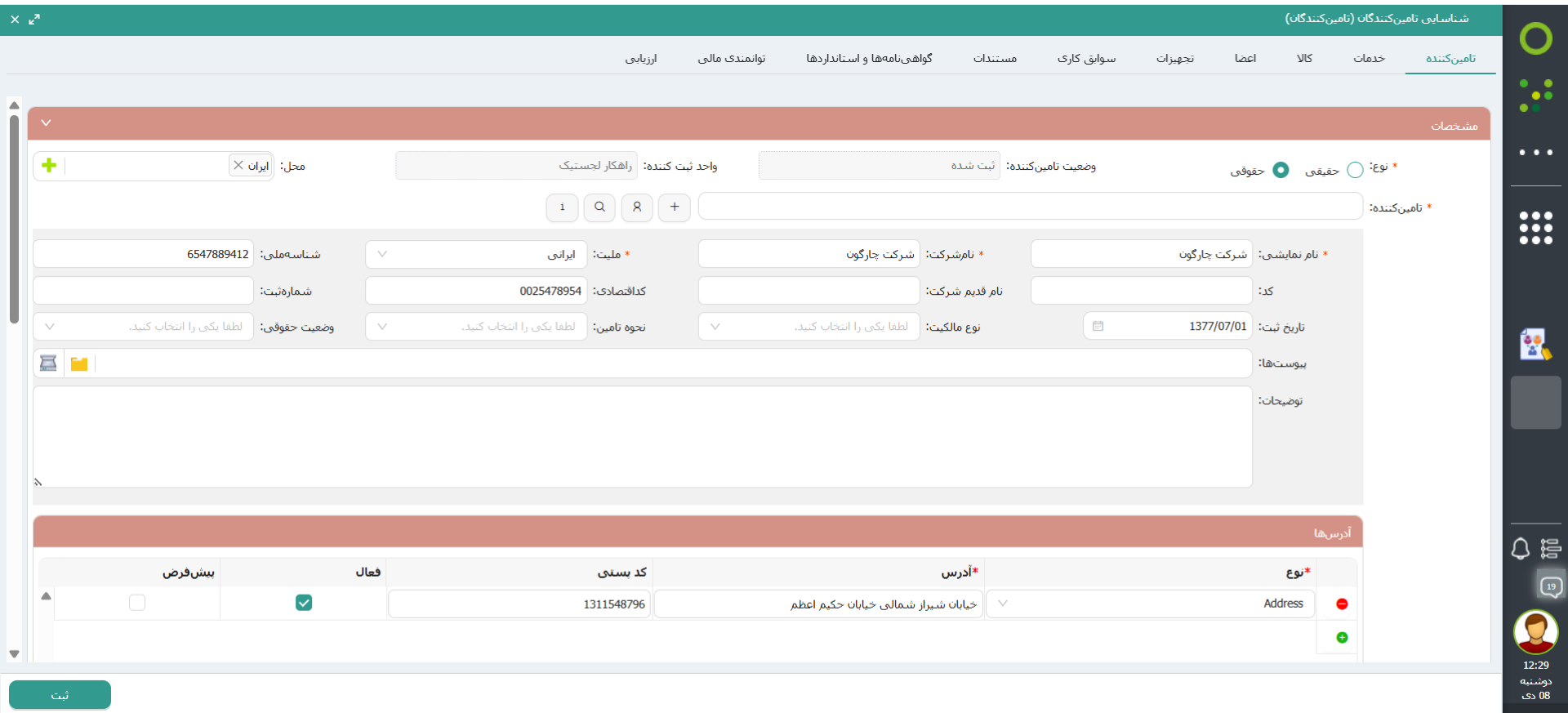
The supplier database, records of cooperation and performance evaluation are integrated with the warehouse, budget and contract systems. The ability to define supplier categories and groups is provided for better management.
Reporting and Management Dashboard
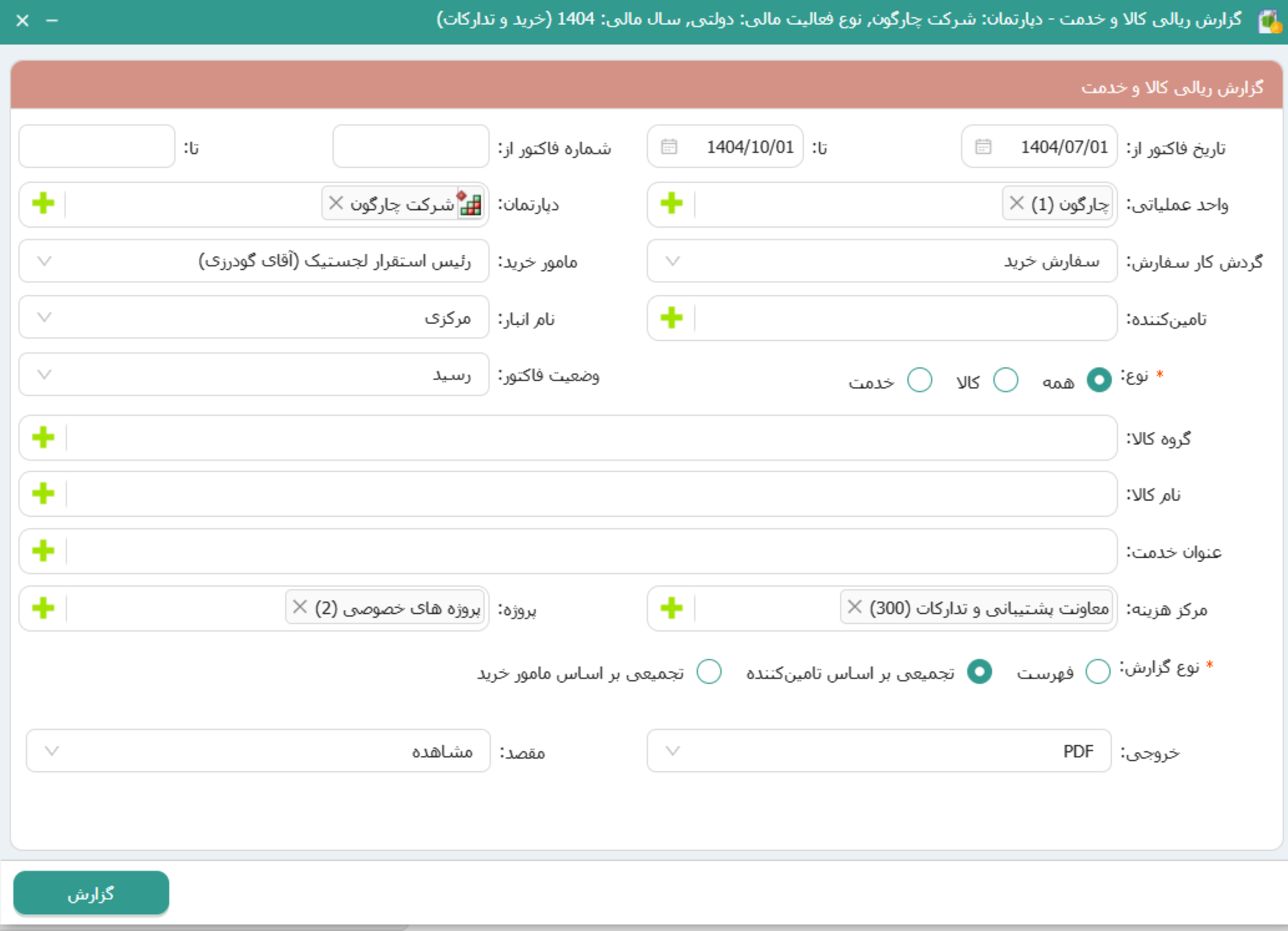
Reports and analytical dashboards provide managers with the status of requests, orders, purchases, and supplier performance. Reports can be filtered and customized to enable fast, informed decision-making.
Common Organizational Challenges and How Procurement Management Addresses Them
High volume of requests, low time
In large organizations, the high volume of purchase requests prevents the purchasing officer or manager from having the opportunity to carefully review everything. This time pressure often causes orders to be processed based on the first available information, not on their true importance. The result is delays in purchasing essential goods or making less important purchases, which wastes valuable organizational resources.
Didgah software prioritizes requests based on factors such as urgency, monetary value, and impact on the organization’s operations. This feature allows the purchasing team to immediately focus on the most important orders and to process less important orders in a timely manner, without compromising the quality of work or the speed of delivery.
Incorrect needs assessment
Registering purchase requests without a thorough analysis of the actual need leaves the organization with surpluses or shortages of critical items. This mismanagement often results from a lack of clear communication between the requesting teams and the warehouse, resulting in the warehouse being filled with unnecessary items or activities being stopped due to lack of inventory.
Didgah’s direct connection to the warehouse system allows the current inventory and consumption location to be checked before registering each request. In addition, specific fields for recording the purpose and priority of the purchase in the request form increase decision transparency and managers can separate the real need from the unnecessary request.
Lack of a supplier bank
Selecting a supplier without a reliable database leads the organization to make subjective or subjective choices based on the limited experience of individuals. This practice not only reduces the quality of purchases, but also increases the risk of working with unreliable suppliers, which in the long run creates irrecoverable costs.
Didgah’s procurement and logistics software creates a comprehensive database of suppliers that includes cooperation records, performance ratings, areas of activity, and even a blacklist for unsuitable suppliers. With quick access and advanced filters, the purchasing team can select the best supplier at any time based on the organization’s real experience.
Insufficient coordination with warehouse
When the purchasing process is carried out separately from the warehouse system, duplicate and surplus purchases are inevitable. This situation not only blocks the organization's capital, but also causes the accumulation of goods and occupation of warehouse space, and reduces the organization's logistical capacity.
Didgah's purchasing and logistics software automatically checks the warehouse inventory before starting the purchasing process. If the goods are available in the warehouse, the withdrawal from the warehouse replaces the purchase. This optimized process shortens the purchasing path and prevents excessive consumption of resources.
Inadequate financial control
The lack of a financial monitoring system in purchases causes commitments and expenses to exceed the set budget. Such violations are often detected late, when serious financial discrepancies have arisen and are difficult or impossible to correct.
Didgah’s procurement and logistics software, by connecting to the budget system, systematically checks the required credit before issuing each order. Only if the budget is approved, the process is completed and after the purchase, the cost is automatically recorded in the financial system. This control loop ensures financial discipline from start to finish.
Manual process
Using paper forms or scattered files to record and track purchases slows down the work and increases the likelihood of human error. In addition, managers are unable to monitor operations in real time, and the transparency of the process is compromised.
The complete digitalization of the purchasing process in Didgah software allows all stages from registration of the request to delivery and settlement to be carried out on a single platform. This focus minimizes errors, enables real-time reporting, and increases the speed of work many times over.
Complete Supply Cycle
1 Before Buying
Everything starts with identifying the need. If the goods are available in the warehouse, the software checks the inventory by connecting directly to the warehouse system and records the possibility of picking up the goods to prevent unnecessary purchases. In the event of a lack of inventory or a need for a service, a purchase request is registered and the place of consumption, the applicant unit, priority and necessary permissions are specified so that approvals can be carried out automated. For services, the processing path is directed to two modes, "service purchase" or "direct execution", according to the procurement method. The precise selection of the department, recipient and place of consumption is also done by connecting to the organizational structure.
2 While Shopping
After registering and approving the request, the software selects the appropriate route from the inquiry or tender according to the type and value of the purchase and proceeds with the steps according to the regulations. The budget credit is controlled by the system and, if necessary, the purchase information is transferred to the contracts. The purchases subject to formalities are made with the relevant software and the commission affairs proceed from coordination to online holding through the meeting system. Up-to-date supplier information is also available from the centralized bank.
3 After Purchase
After the goods are delivered to the organization, the warehouse receipt is registered as an official document in the system and matched with the purchase order to confirm that the items received are in accordance with the original request. Then, order, contract, budget and related document information is systematically provided to the finance unit to review and settle the account with the supplier. This process is integrated with warehouse, budget and contract software, and all steps are under strict control and documentation. Comprehensive and up-to-date reports are also available to managers for inventory monitoring, financial obligations and supplier performance evaluation.
Deployment and Support Services
Chargoon, with a companion approach to software deployment, provides a smooth and uncomplicated experience for customers. From inception to full deployment, the Chargoon team stands by organizations every step of the way to ensure the software is serving their goals and needs.
After deployment, Chargoon support continues with prompt responses and uninterrupted service. This commitment to companionship and reassurance creates an environment where customers can focus on developing and improving their organization with peace of mind.
Procurement Management Integrations with Other Software
Warehouse and Inventory Accounting Software
Automatically Send Out-of-Stock Requests, Record Receipts, and Update Inventory
budget and appropriation Software
Reserve and Record Credit Commitments Before Ordering and Record Credit Provisions After Purchase
Contracts Software
Manage Contract-Based Purchases, Whether Large or Daily
Accounting Software
Send invoice information to the financial system without re-entering data
Transaction Formalities Module
Complete management of the bidding process from registering commissions to selecting suppliers
Centralized and up-to-date access to supplier records and assessments
To make a smart choice, consider all aspects
There are several other software applications in use in our organization, does Didgah have the ability to integrate with them?
Yes. Didgah integrates easily with your other systems using standard APIs. If your existing software is compatible, Chargoon’s technical team will support you in implementing and completing the integration.
Our organization's purchasing regulations are governmental, is the software compatible with these regulations?
Yes, absolutely. Didgah is designed to be compatible with a variety of regulations and transactional rules, whether general or specific. The procurement workflow will be implemented based on your organization’s specific requirements.
Our organization's bylaws are different from others, can I adjust the purchasing process accordingly?
Yes. Didgah software is fully customizable. We review your organization’s specific structure and processes and configure the software exactly accordingly.
Will it be difficult for me or my colleagues to work with this software?
No. Didgah has a simple user interface and transparent processes. Learning to work with it is quick and easy, and complete and practical training is provided to you and your team.
I need varied, detailed reports. Does Didgah Purchasing and Procurement Software provide them?
Yes. In this software, you can prepare comprehensive and parametric reports of requests, purchases, operations and suppliers.
Can I design my own report?
Yes. You can create your own custom reports, select and arrange columns, and get the desired output.
Our organization is private. What type of organization is this software more suitable for?
This software has been the choice of many government and semi-government organizations, banks, universities, insurance companies, brokerages, as well as private companies.
What is the difference between Didgah and similar software for us?
Didgah's advantage lies in its complete integration with other organizational systems, from accounting and warehouse to budgeting, contracts, and procedures. In addition, its simple and user-friendly design makes things faster and more effective.