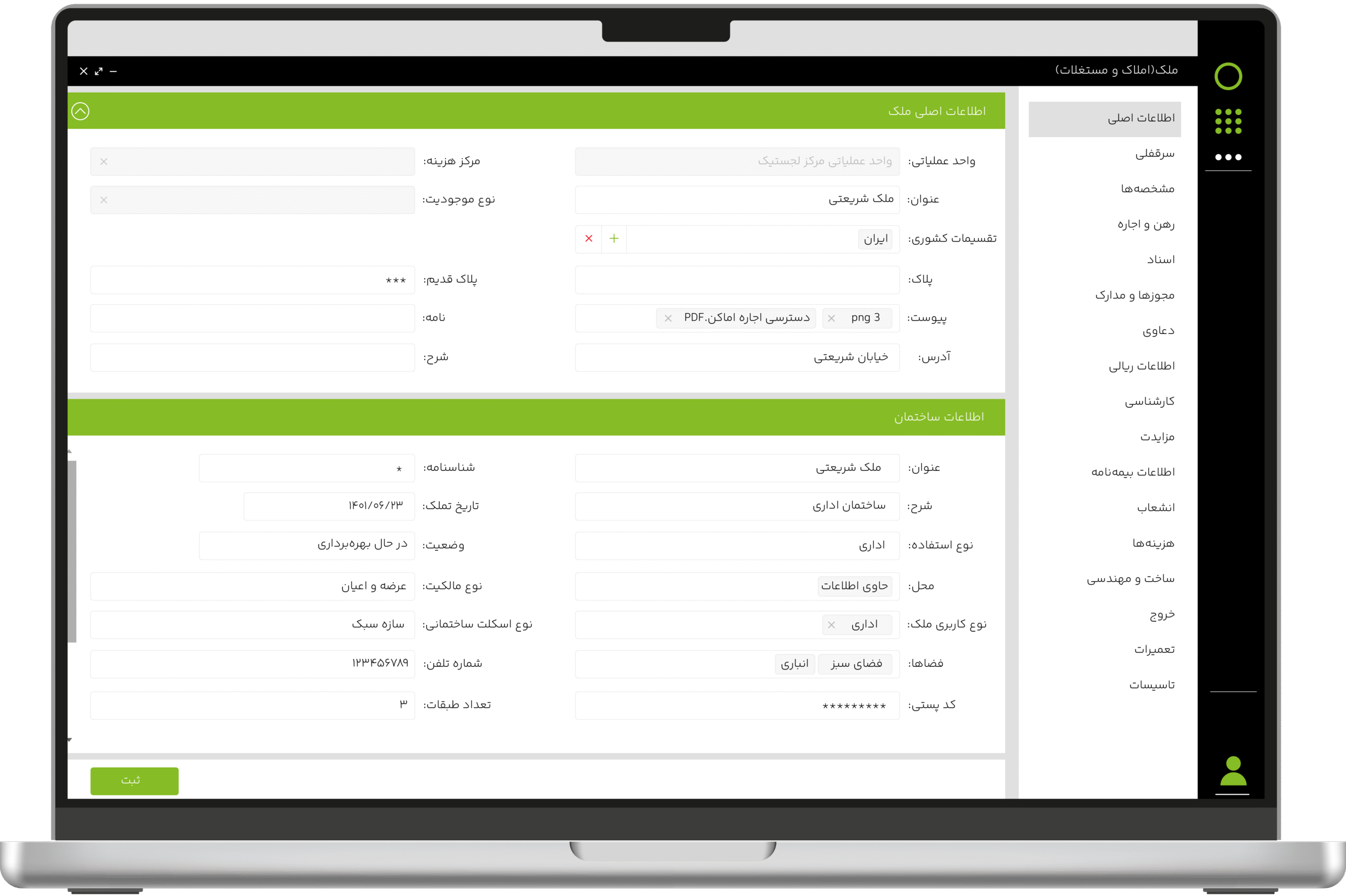
In holdings and multi-tier organizations where each unit has its own independent financial office, differences in coding structure and delays in information consolidation make decision-making slow and risky. Chargoon Didgah consolidated accounting service, with support for intelligent mapping, multi-tier consolidation and precise access down to the document level, provides a comprehensive, integrated and reliable picture of the financial performance of the entire complex so that managers can make decisions faster, more reliably and with more confidence.

In holdings and large organizations where each subdivision has its own coding, harmonizing coding across all units is a difficult and time-consuming task. By creating a common structure and intelligent mapping between codings, this service reconciles the differences and makes the data ready for consolidation without errors or rework.
Automatic Aggregation of Accounting Documents
The need to update financial information in organizations varies. Some want instant reports, while others want daily or periodic reports. This service allows aggregation with flexible time intervals, from hourly to monthly, and the financial manager has access to up-to-date and complete reports at any time.
Multi-layer Consolidated Financial Statements
In multi-level structures, from the parent company to local units, each level needs its own consolidated report. This service produces integrated financial reports at each organizational level while strictly respecting access levels.
Coherence of Reports Despite the Variety of Structures
Complete coding uniformity is not possible across diverse organizations, but with flexible mapping, data from different units can be adapted and transformed to produce accurate consolidated reports without the need for unit coding.
Access Up to the Document Level
This service goes beyond generating final reports and allows direct viewing of subsidiary documents, transaction details, measurement of inter-unit exchanges and quick identification of discrepancies.
More Experience Than Establishment
At Chargoon, deploying this service is not just about installing software. Relying on the experience of experts, the optimal coding structure, synchronization method, determination and aggregation timing are designed to suit the needs of each organization to ensure high productivity from the very beginning.
Consolidated Accounting Features
Accounting Coding Structure Sync
Establish and maintain complete integration between the coding of the headquarters financial office and the companies, branches and subsidiary offices, so that any change or modification in the coding structure is immediately applied throughout the entire complex. This process prevents structural inconsistencies and ensures the accuracy of financial operations.
Independent management of non-effective segments
The ability to define and manage specific coding by each subsidiary in segments that do not affect the consolidated financial statements is provided, so that the units remain aligned with the organization's macro-financial goals while maintaining operational independence.
Document aggregation based on schedule
Regular and automatic collection of accounting documents of subsidiary offices at predetermined or arbitrary time intervals, with full control over the time and method of data transfer, and improves the quality of aggregated data.
Consolidation with different coding
Combining and integrating accounting documents of units using different codings is done by defining equivalent codes so that even in the case of diversity of structures, final reports are produced without discrepancies.
Preparation of consolidated financial statements in a desired period
Complete reports of consolidated financial statements are produced for any desired period, whether at the end of the period or interim period, so that managers can have greater speed and accuracy in their financial decisions.
Direct viewing of subsidiary documents
Access to complete details and the most detailed data of subsidiary accounting documents is provided directly so that analyses can be more accurate and necessary corrections can be made without delay.
Providing reports to auditors and managers
Comprehensive and structured reports are prepared based on consolidated documents to meet both auditors' needs for detailed reviews and managers can access the most transparent information.
Deployment and Support Services
Chargoon, with a companion approach to software deployment, provides a smooth and uncomplicated experience for customers. From inception to full deployment, the Chargoon team stands by organizations every step of the way to ensure the software is serving their goals and needs.
After deployment, Chargoon support continues with prompt responses and uninterrupted service. This commitment to companionship and reassurance creates an environment where customers can focus on developing and improving their organization with peace of mind.
Consolidated Accounting Integrations with Other Software
Financial Accounting Software
Synchronous with Consolidated Accounting Service to receive and consolidate financial documents and data of subsidiaries
budget and appropriation Software
Receive consolidated data from Consolidated Accounting Service to monitor and control the organization's budget
Management Dashboards
Displaying indicators and reports from consolidated accounting service data in the form of charts and management analysis
Power BI
Using Consolidated Accounting Service Data to Generate Advanced Reports and Analytics
To make a smart choice, consider all aspects
What is the difference between consolidated accounting and consolidated accounting?
Consolidated accounting is the process of gathering financial information from different accounts without eliminating intragroup transactions, with the aim of providing a comprehensive picture of the organization's financial performance. Consolidated accounting is performed according to accounting standards and involves eliminating transactions between units to prepare legally binding consolidated financial statements.
If the subsets have different coding, how is aggregation possible?
Using the coding mapping feature, different structures are adapted to the headquarters reference structure, even if they are completely different.
Can I define a desired time frame for document aggregation?
Yes, the definition of time periods from hourly and daily to weekly and monthly is configurable and the system automatically performs the consolidation.
Can my organization's experts see the subcategory documents directly?
Yes, based on the defined access level, experts or financial managers of the parent organization can view the documents of the subsidiary accounts for faster analysis and correction.
Should all financial offices have the same coding structure?
No, with Didgah consolidated accounting, the coding structure can be independent in the sub-units and tailored to the needs of that unit. Only in the sections that affect the consolidated financial statements, they must be synced or connected to the reference structure using smart mapping.
How long does it take to implement this service and what is the role of Chargoon experts?
Depending on the number of financial books, the difference in coding and the complexity of the structure, the time varies. Chargoon experts play an active role in designing the reference coding, defining the mapping, setting the consolidation frequency and training the headquarters team.
Does Didgah's consolidated accounting service work with a multi-layer structure?
Yes. Didgah’s consolidated accounting service supports multi-layered and hierarchical structures. For example, each company can prepare consolidated financial statements for its branches, each group can have a consolidated statement of its subsidiaries, or the entire holding can receive a macro-view of the entire group’s performance. All of this is set up with respect to the level of access, independence of offices, and consolidation structures.
How do I use aggregated information for budget monitoring and decision making?
With consistent and up-to-date data, you can identify deviations from budget at the macro or unit level and perform more accurate analyses for management decision-making. This consolidation is the basis for performance and decision-driven dashboards.
Is Didgah's consolidated accounting service integrated with other tools such as ERP or Power BI?
Yes, consolidated financial ledger data can be exported to Didgah’s analytical dashboards and reporting tools.
Can I export aggregate information for use in other systems?
Yes, standard outputs are provided for use in other software.
Can access to aggregated data be controlled?
Yes, access is defined based on organizational role, level of consolidation, and hierarchy.
Can I run the service incrementally?
Yes, it can be implemented starting from a few sub-categories and then expanded.
Does the service comply with the legal requirements of government agencies?
Yes, the service design is compatible with the requirements of upstream institutions such as Treasury instructions, accrual financial statements, and Court of Accounts approvals.