Revenue Software

How do you see your organization's revenue? Scattered and full of identifiers that are time-consuming to coordinate with the central bank? Chargoon Didgah revenue software takes everything from forecasting to collection, step-by-step and structured. With standard identifier templates, a centralized data bank, analytical reports and links to the appropriation system, it ensures financial transparency and discipline, faster decisions, less risk and the revenue stream is always clear and traceable.


Share
Revenue Management Features
  • Three-stage revenue operations

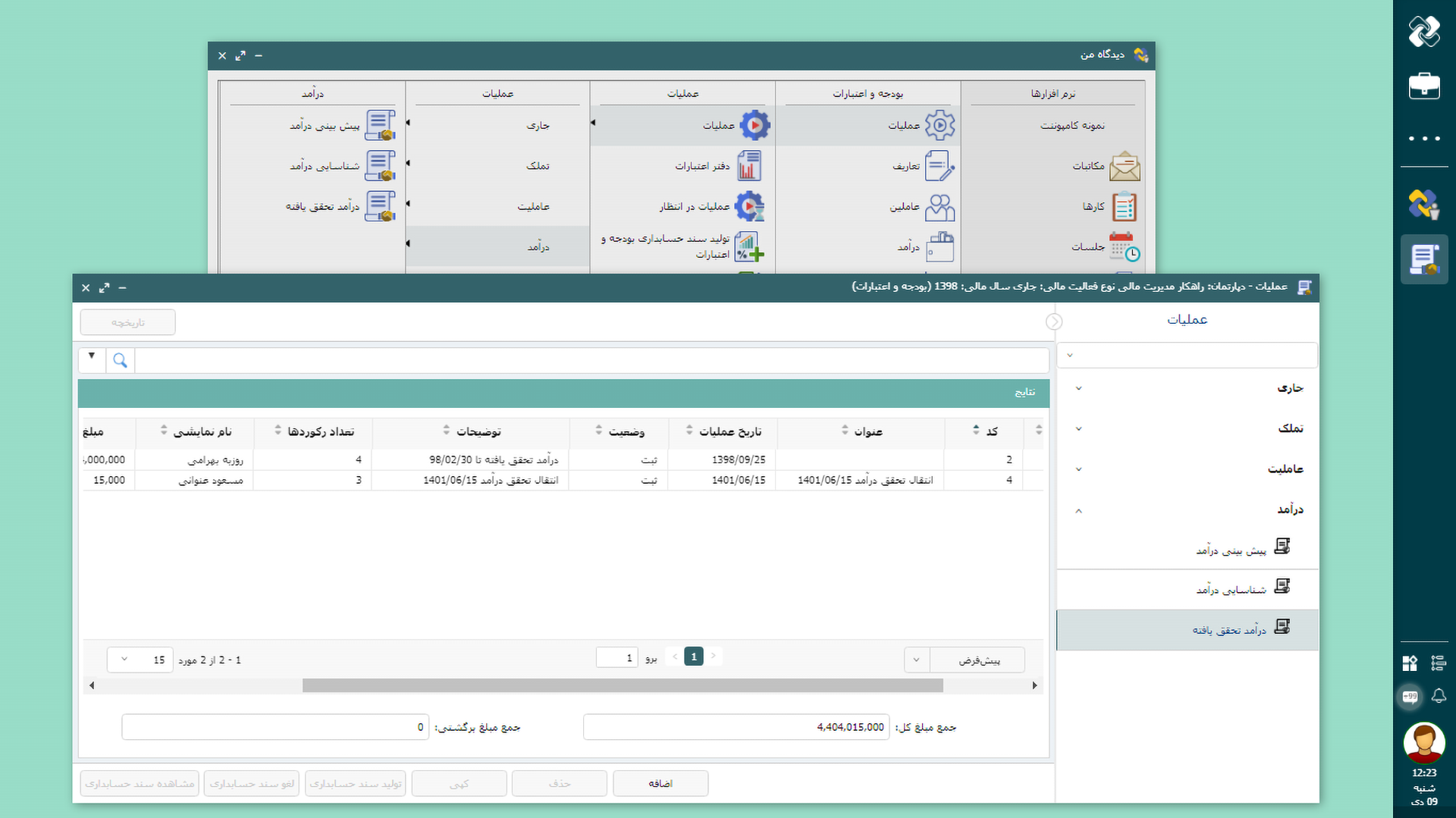
    The ability to record revenue processes at three levels of "forecast", "identify", and "receive" enables step-by-step and fully structured control of resource flows. In many organizations, recording revenue once without separating it makes it difficult to accurately analyze the resource realization process and may result in incorrect or under-allocation of resources. This capability aligns all recorded data with the organization's policies, increases control accuracy, and provides a reliable platform for revenue reporting and analysis.

  • Complete Revenue Classification

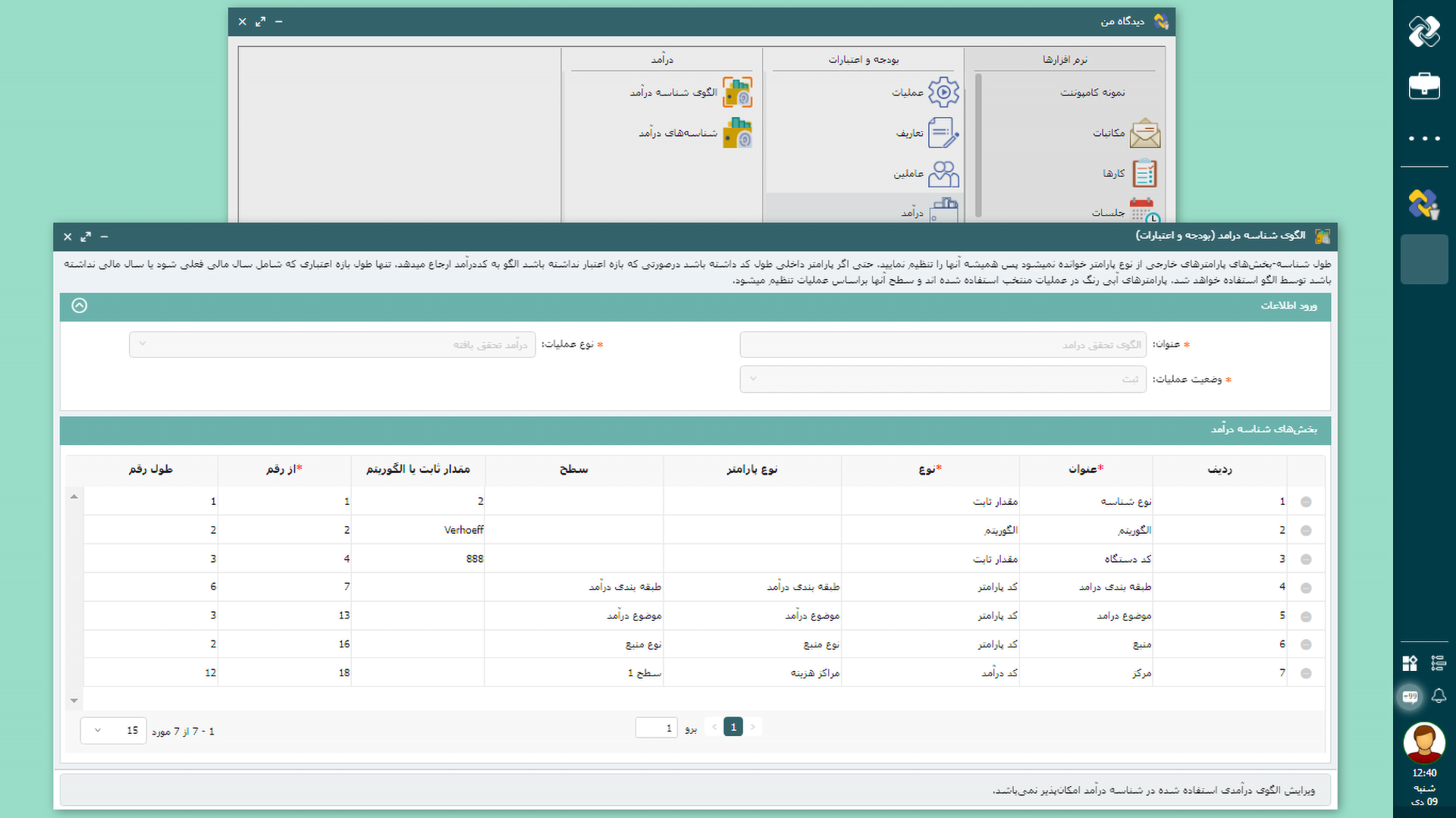
    Defining parameters such as deposit location, income type, classification, and budget line accurately categorizes income. This feature prevents information fragmentation and reduces the efficiency of financial reports, and helps to better analyze and control the process of income realization and the performance of income-generating departments. This structured classification will ensure data consistency, quick access to information, and more accurate budget decision-making.

  • Centralized banking and ID validation

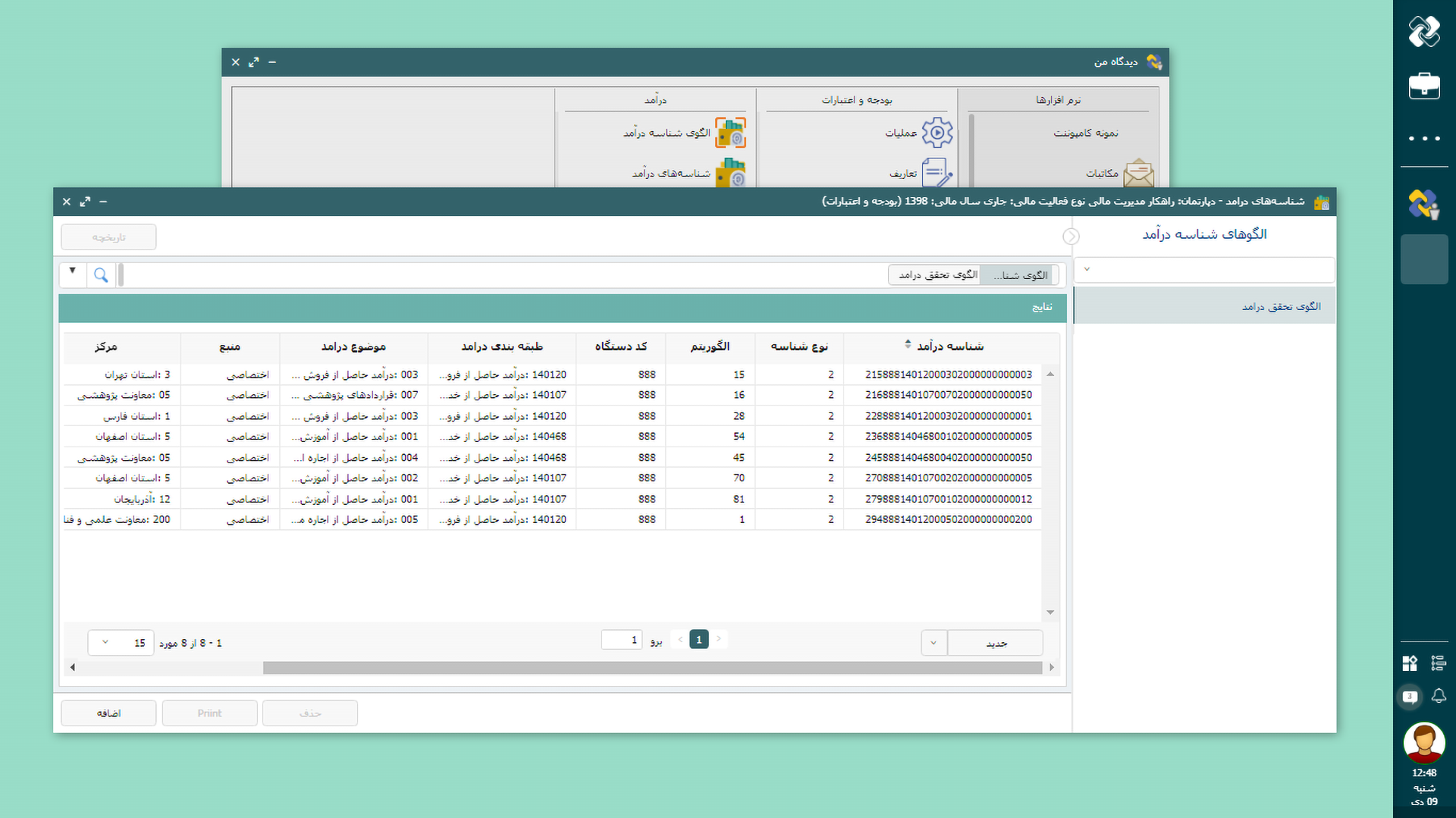
    All revenue IDs are stored and managed in a central database, and it is possible to define, store, and validate IDs. The system automatically prevents duplicate ID registration and warns when there is a discrepancy with the approved structure or Central Bank requirements. This centralization reduces errors, maintains integrity, and increases data security.

  • Automatic identification of the source of income

    Accurate identification of the source of deposits is one of the common nodes in recording and managing the income of organizations. Ambiguity at this stage causes discrepancies in financial reports and a lot of time is spent reviewing transactions. Didgah revenue software, with the ability to automatically match deposit information with the income identifier, identifies its source and records it as a source of income in the budget and accounting. This structured approach both increases the accuracy of resource recording and makes financial reporting faster and more reliable.

  • Automatic issuance of financial documents

    As soon as revenue is recognized or collected, a financial document is prepared with a defined template and sent directly to the accounting system. This reduces recording time, minimizes human errors, and speeds up the flow of information between financial units.

  • Three-level and analytical reporting

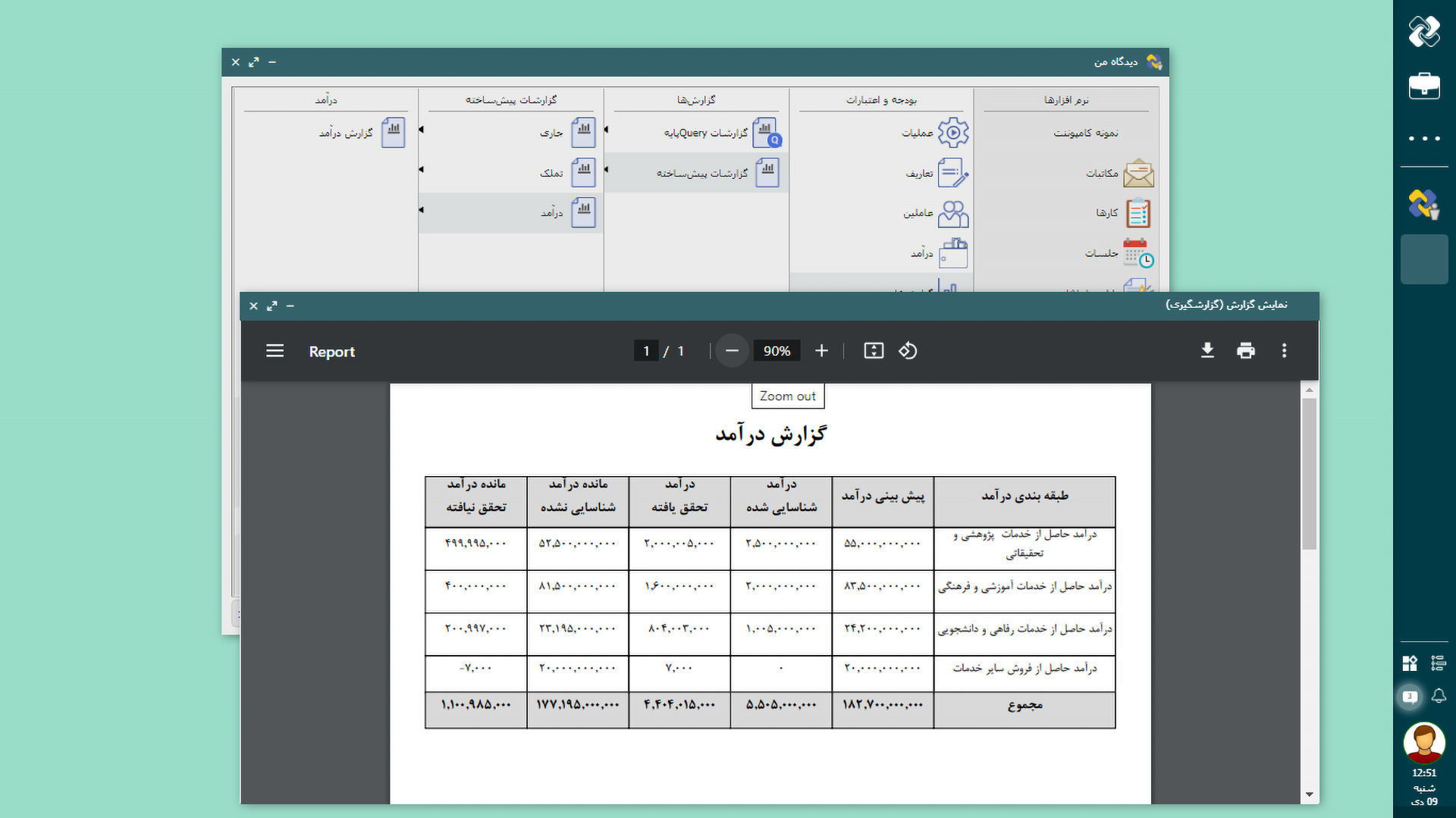
    This software allows you to prepare various and customized reports at three levels of forecasting, identification and collection. These reports display the percentage of realization, the distance from the forecasted income, the type and classification of income and can be exported in different formats. The result is financial transparency and more accurate decision-making.

  • Consumption and spending control

    By linking revenue software with budget and appropriations software, you can check balances, record authorized spending based on the approved budget, and prevent spending that is not in accordance with the budget. This link ensures financial discipline and transparent monitoring of resources.

  • Setting access levels

    A specific viewing or operation level can be defined for each user or organizational role so that sensitive revenue information is not available to unauthorized persons. These system controls increase data security and ensure accurate task execution.

Common Organizational Challenges and How Revenue Management Addresses Them
  • Recording Revenues Without Specific Steps

    In many government organizations, recording revenue operations is done in a one-time manner without a specific structure. This method causes inconsistency in controlling the inflow of resources, reduces the accuracy of forecasting and identifying revenues, limits the analysis of the resource realization process, and causes problems such as inappropriate allocation or deficit of resources.

    Didgah revenue software allows you to define operations at three levels: "forecast", "identify" and "receive". This step-by-step structure ensures that data is aligned with the organization's policies, improves the accuracy of resource control, and creates a suitable platform for accurate reporting and analysis of revenue performance.

  • Dispersion and lack of precise classification of revenues

    Recording revenues without defining separate parameters such as deposit location, type of revenue, classification, and budget lines causes dispersion of information and reduces the quality of financial reports. This does not create a clear view of revenue sources and makes it difficult to analyze and manage resources purposefully.

    The ability to define revenue parameters in Didgah revenue software allows revenues to be categorized based on deposit location, revenue type, classification, and other indicators desired by the organization. This feature brings about consistency in financial information, facilitates analytical reporting, and increases accuracy in budget decisions.

  • Chaos in ID Management

    Maintaining IDs in scattered files (such as Excel) results in duplicate IDs, invalid structures, and loss of data integrity.

    By creating a centralized bank of revenue IDs in Chargoon software, all IDs are stored, defined, and automatically validated in a single archive. The system prevents the recording of duplicate or inconsistent identifiers, thus increasing data quality and security.

  • Weaknesses in reporting

    The lack of step-by-step reports from forecast to revenue collection makes financial decision-making difficult, limits the performance assessment of revenue-generating units and analysis of the gap to goals.

    Chargoon Didgah revenue software’s diverse and customized reports display the percentage of realization, gap to forecast, type and classification of revenues at three main levels, and provides practical analytical outputs.

  • Uncertainty in the Origin of Deposits

    In many organizations, identifying the exact origin of deposits and converting them into revenue sources for recording in the financial system is done manually and time-consuming. The lack of an automated mechanism causes uncertainty in recording, discrepancies in reports, and waste of time in reviewing transactions.

    The ability to match received information with the revenue identifier in Didgah revenue software accurately identifies the source of revenue and records it in the budget and accounting. This increases the accuracy of recording, eliminates discrepancies, and facilitates reporting.

Deployment and Support Services

Chargoon, with a companion approach to software deployment, provides a smooth and uncomplicated experience for customers. From inception to full deployment, the Chargoon team stands by organizations every step of the way to ensure the software is serving their goals and needs.

After deployment, Chargoon support continues with prompt responses and uninterrupted service. This commitment to companionship and reassurance creates an environment where customers can focus on developing and improving their organization with peace of mind.

To make a smart choice, consider all aspects

  • How does revenue software help manage my organization's revenue?

    This software simplifies the identification and management of revenue, enables the rapid issuance of financial documents, and provides accurate reports on the status of revenue.

  • How does the income software help me in registering income documents?

    It simplifies the process of recording revenue, identifies the required identifiers, and automatically issues accounting documents.

  • Can I define specific templates for my organization's revenue IDs?

    Yes, it is possible to define specific templates for IDs to match the organization's structure and needs.

  • Is it possible to receive various income reports for my organization?

    Yes, you can prepare comparative and analytical reports in the shortest possible time and use them for decision-making.

  • Does the revenue software have a solution to prevent the creation of duplicate IDs?

    Yes, it prevents the registration of duplicate IDs by creating an archive of revenue IDs and validation.

  • Is it possible to identify the source of income?

    Yes, it is possible based on the defined identifiers and the identification process will be much faster.

  • Is it possible to filter earnings by date?

    Yes, it is possible to search and filter income by specific dates.

  • Is it possible to compare income with expenses with this software?

    Yes, with budget and appropriation software, it is possible to make detailed comparisons and analyses.

  • Is it possible to define access levels?

    Yes, access levels can be adjusted according to organizational roles.

  • What is the general working process of revenue software?

    The general process includes recording revenue forecasts, defining identifiers, recording identified revenue, issuing its document, recording collected revenue, issuing a collection document, and preparing a comparative report between these three stages.

Demo request

  • This field is for validation purposes and should be left unchanged.